
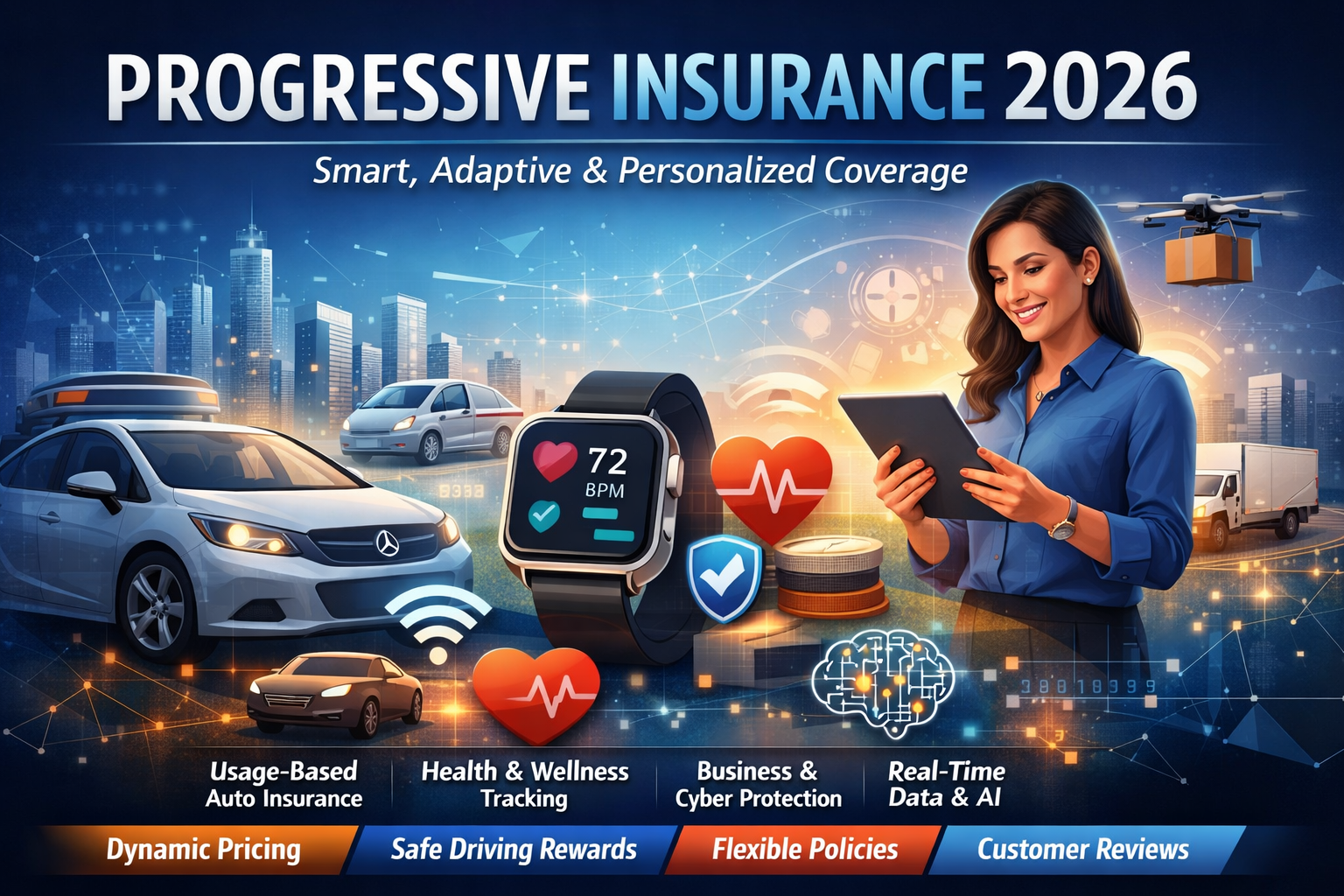
Progressive Insurance Explained: Save on Coverage Today
The insurance industry is undergoing one of the biggest transformations in its history. Digitalization, artificial intelligence, behavioral data, and personalized services are reshaping how insurers operate and how customers interact with coverage. At the center of this evolution is the concept of progressive insurance — an adaptive, customer-focused, data-driven approach that changes the way policies are designed, priced, and managed.
Today, progressive insurance is no longer just a brand name or a marketing concept. It represents a modern philosophy of insurance: flexible, responsive, and built around real user behavior rather than static assumptions. From auto coverage to health insurance, business risk protection to cyber insurance, progressive insurance models are redefining what it means to be insured.
This comprehensive guide explores everything you need to know about progressive insurance: what it is, how it works, its advantages, limitations, real-world applications, pricing strategies, and future developments. Whether you are an individual consumer, business owner, fleet manager, or insurance professional, understanding progressive insurance is essential to navigating the future of risk management.
What Is Progressive Insurance?
Progressive insurance refers to a modern insurance approach where policies evolve over time based on the insured person’s behavior, risk exposure, and needs. Instead of relying solely on static data such as age, location, or historical averages, progressive insurance integrates real-time insights, personalized risk evaluation, and adaptive pricing.
Key characteristics include:
- Dynamic pricing models
- Behavior-based risk assessment
- Continuous policy adjustments
- Data-driven underwriting
- Personalized coverage levels
- Incentives for responsible behavior
The central idea is simple: insurance should adapt to the policyholder — not the other way around.
Traditional insurance systems often treat customers as part of large statistical groups. Progressive insurance, on the other hand, focuses on the individual. It recognizes that risk changes over time and that policies should reflect real-life patterns rather than assumptions.
The Origins and Evolution of Progressive Insurance
The rise of progressive insurance did not happen overnight. It emerged through several major industry shifts:
1. Digital transformation
Insurance companies increasingly use mobile apps, connected devices, and cloud platforms to collect and analyze data. This technological foundation enables policies that evolve continuously.
2. Behavioral economics
Insurers realized that rewarding positive behavior — safe driving, healthy lifestyles, risk prevention — leads to fewer claims and better outcomes for everyone.
3. Customer expectations
Modern consumers demand:
- flexibility
- transparency
- personalization
- instant service
Progressive insurance addresses all of these expectations.
4. Competitive market pressures
New insurtech companies disrupted traditional models by offering usage-based and on-demand insurance. Established insurers adapted by implementing progressive strategies.
How Progressive Insurance Works
Progressive insurance operates through an adaptive lifecycle rather than a fixed policy structure.
Step 1: Initial risk assessment
The process begins with evaluating the customer’s profile:
- personal information
- historical claims
- lifestyle habits
- asset value
- risk exposure
Step 2: Policy creation
A flexible policy is created with:
- adjustable coverage limits
- customizable deductibles
- modular protections
Step 3: Continuous data collection
Depending on the type of insurance, data may include:
- driving behavior
- health metrics
- property usage
- business activity levels
Step 4: Ongoing risk analysis
Algorithms analyze trends and risk patterns.
Step 5: Progressive adjustments
Coverage, premiums, and benefits evolve over time:
- reduced premiums for low risk
- added protections for increased exposure
- tailored recommendations
Progressive Insurance in Auto Coverage
Auto insurance is the most advanced and widely adopted area for progressive insurance models.
Usage-based insurance (UBI)
Drivers pay based on:
- miles driven
- time of day
- location
- driving style
Telematics technology
Smart devices track:
- braking patterns
- acceleration
- cornering
- speed consistency
Benefits for drivers
- fair pricing
- incentives for safe driving
- accident prevention
- real-time feedback
Benefits for insurers
- improved risk accuracy
- reduced fraud
- lower claims costs
Progressive Insurance in Health Coverage
Health insurance is moving toward prevention rather than reaction.
Behavior monitoring
Wearables and apps track:
- steps
- heart rate
- sleep
- diet
Preventive programs
Insurers offer:
- fitness rewards
- wellness coaching
- early detection alerts
Progressive pricing
Healthier lifestyles can lead to:
- lower premiums
- enhanced coverage
- bonus benefits
Progressive Insurance for Businesses
Companies are adopting progressive insurance to manage complex risks.
Fleet insurance
Pricing adjusts based on:
- driver performance
- accident rates
- vehicle maintenance
Liability insurance
Coverage evolves with:
- revenue growth
- operational changes
- market expansion
Cyber insurance
Premiums reflect:
- security infrastructure
- employee training
- threat detection systems
Core Benefits of Progressive Insurance
Personalized coverage
Policies are tailored to the individual or organization.
Cost optimization
Customers pay for actual risk, not estimated averages.
Preventive approach
Encourages safer and healthier behavior.
Transparency
Clear criteria for pricing and adjustments.
Flexibility
Policies adapt to life changes:
- moving home
- changing jobs
- buying assets
Challenges and Limitations
Despite its advantages, progressive insurance raises several concerns.
Data privacy
Sensitive personal data must be protected.
Complexity
Dynamic policies may be harder to understand.
Technology dependence
Relies heavily on digital infrastructure.
Potential bias
Algorithms may unintentionally create inequalities.
Progressive Insurance vs Traditional Insurance
| Feature | Traditional Insurance | Progressive Insurance |
|---|---|---|
| Pricing | Fixed | Dynamic |
| Data usage | Historical | Real-time |
| Personalization | Limited | High |
| Policy updates | Infrequent | Continuous |
| Customer engagement | Passive | Active |
Pricing Models in Progressive Insurance
Pay-as-you-drive
Ideal for low-mileage drivers.
Pay-how-you-drive
Rewards safe driving behavior.
Pay-as-you-live
Health-based pricing tied to lifestyle.
Pay-as-you-use
Common in equipment and business insurance.
Role of Artificial Intelligence
AI is the backbone of progressive insurance.
It enables:
- predictive analytics
- fraud detection
- real-time pricing
- personalized recommendations
Machine learning models continuously improve as more data becomes available.
Impact on Customer Experience
Progressive insurance transforms the relationship between insurer and policyholder.
Continuous interaction
Apps and dashboards provide real-time insights.
Empowerment
Customers actively manage their risk profile.
Engagement
Gamification and rewards increase participation.
Progressive Insurance and Insurtech
Insurtech startups drive innovation by offering:
- instant quotes
- digital onboarding
- micro-insurance products
- automated claims processing
Traditional insurers increasingly adopt these technologies.
Regulatory Considerations
Governments and regulators are adapting to:
- data protection requirements
- algorithm transparency
- consumer rights
Compliance is critical for sustainable growth.
Real-World Applications
Smart homes
Sensors detect:
- water leaks
- fire risks
- intrusions
Policies adjust based on safety levels.
Connected cars
Vehicles transmit performance and risk data.
Wearable health tech
Continuous monitoring influences health coverage.
Progressive Insurance for High-Risk Profiles
It allows better segmentation:
- young drivers
- new businesses
- emerging markets
Instead of rejection, policies evolve with risk reduction.
Economic Impact
For insurers
- better loss prediction
- reduced operational costs
- improved customer retention
For consumers
- fairer pricing
- more relevant coverage
- increased awareness of risk
Ethical Considerations
Key questions include:
- Who owns the data?
- How is it used?
- Can customers opt out?
Trust is essential for adoption.
The Future of Progressive Insurance
Several trends will shape its development.
Hyper-personalization
Every policy becomes unique.
Autonomous vehicles
Insurance models shift from driver risk to system risk.
Predictive prevention
AI prevents incidents before they occur.
Embedded insurance
Coverage integrated directly into products and services.
Why Progressive Insurance Matters Today
The modern world is defined by rapid change:
- mobility shifts
- remote work
- digital lifestyles
- global risks
Static insurance cannot keep up.
Progressive insurance offers:
- adaptability
- relevance
- resilience
How to Choose a Progressive Insurance Policy
Consider the following factors:
Data transparency
Understand what is collected and why.
Flexibility
Ensure policy adjustments are easy.
Rewards structure
Look for incentives that align with your lifestyle.
Customer support
Human assistance remains important.
Progressive Insurance for Fleet Managers and Transport Companies
Fleet operations benefit significantly from progressive insurance.
Real-time monitoring
Track:
- driver performance
- fuel usage
- safety metrics
Risk reduction
Identify high-risk behaviors early.
Cost efficiency
Lower accident rates lead to lower premiums.
Case Study Approach
Businesses implementing progressive insurance often report:
- 20–30% reduction in claims
- improved driver safety
- better operational visibility
Common Misconceptions
“It’s more expensive”
Often the opposite — low-risk customers pay less.
“It invades privacy”
Participation is usually optional.
“It’s only for auto insurance”
It applies across many sectors.
Progressive Insurance and Sustainability
Environmental behavior can influence premiums.
Examples:
- eco-driving rewards
- green home incentives
- carbon footprint monitoring
Digital Platforms and Mobile Apps
Mobile interfaces allow:
- instant policy updates
- risk insights
- claim tracking
- reward management
Claims Management Revolution
Progressive insurance improves claims processing:
- automated assessment
- faster approvals
- reduced fraud
Business Opportunities
Entrepreneurs can build services around:
- data analytics
- risk prevention
- fleet optimization
- health coaching
Conclusion
Progressive insurance represents a fundamental shift in how protection is designed, delivered, and experienced. It moves insurance from a reactive financial safety net to a proactive, personalized, and adaptive system.
By leveraging real-time data, artificial intelligence, and behavioral insights, progressive insurance creates a fairer and more responsive model. Customers gain more control, insurers gain better risk visibility, and society benefits from improved prevention.
As technology continues to evolve, progressive insurance will become the standard rather than the exception. Individuals, businesses, and institutions that understand and adopt this approach early will be better positioned to manage uncertainty, reduce costs, and stay protected in an increasingly complex world.
The future of insurance is not static. It is progressive.
FAQ – Progressive Insurance
Customer Reviews
Share this content: